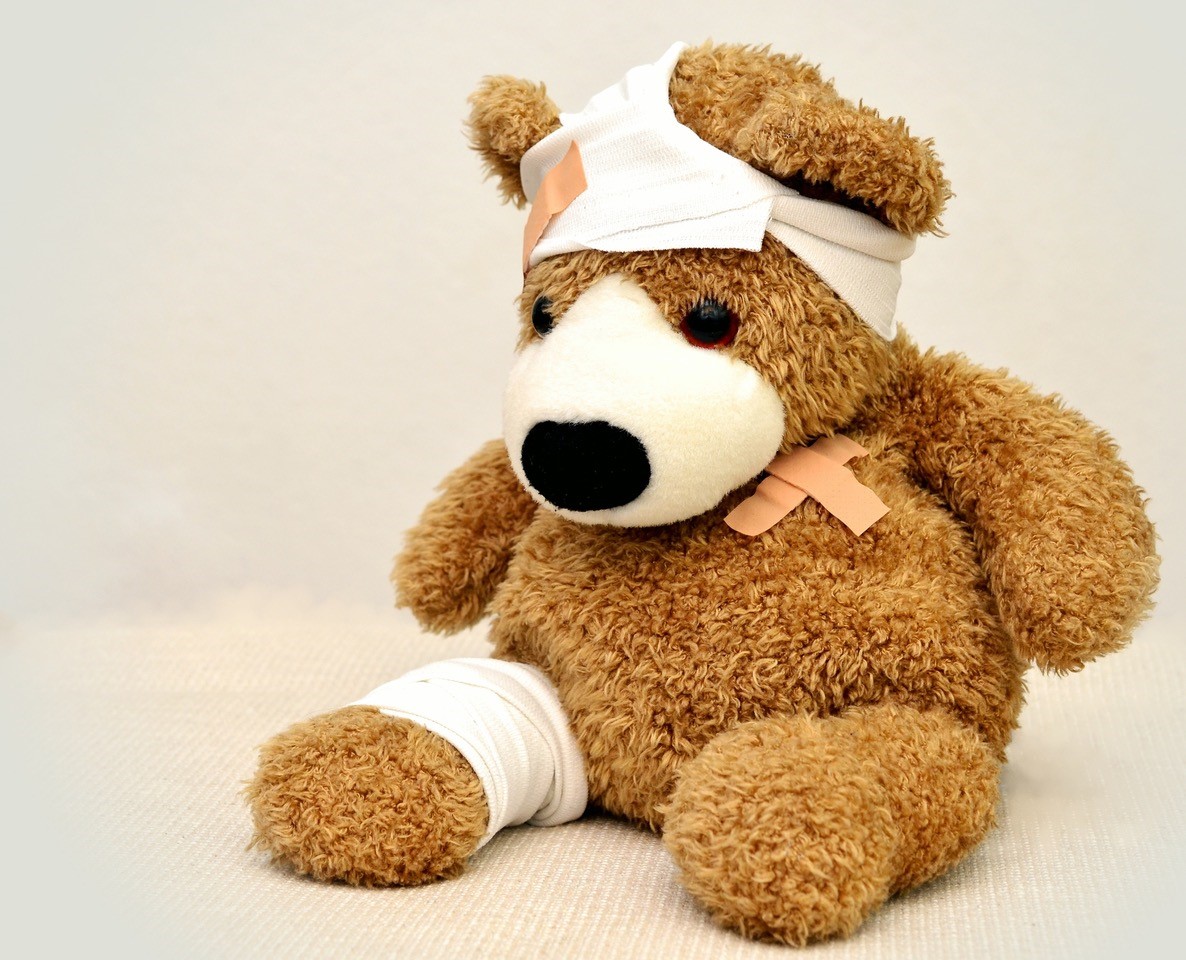
Children are full of energy, curiosity, and a thirst for adventure. They want to explore, try things out, and take risks – and that's a good thing! But not all experiments are successful, and this can quickly lead to minor injuries, wounds, or accidents.
As a first aid instructor at the German Red Cross Bremen district association and a true expert, Michael Freyhoff gives the most important tips so that parents can act quickly and correctly in emergency situations.
1) Prevent potential dangers
Prevention is better than cure: Are the electrical outlets safe? Is the garden pond covered? Are the cleaning supplies stored securely? Can the child reach the hot stove? There are many potential hazards at home, and of course, a completely childproof house is impossible.
But if parents try to see everything from their child's perspective, many dangers can be avoided! What sparks a child's curiosity, what is too easily accessible and not properly secured? Drugstores and hardware stores offer many things that can make a house or apartment safer.
>> More good tips for everyday safety
2) Treat small wounds and bruises well
When children fall on their noses, it's usually not as bad as it first appears. The good news: if your child comes running towards you screaming, you can almost always be sure that nothing is broken.
For scratches, first aid is helpful; for bruises, gentle cooling is beneficial. If you can treat a wound with a regular bandage, you usually don't even need to see a doctor. A loving hug or a kiss on the injured area from Mom, Dad, Auntie, or an older brother is just as important a form of care for children.
3) It's better to call the emergency number 112
However, if your child cannot move their arm or leg normally after a skateboard accident or while playing roughly, call 112! Make sure your child doesn't get cold and doesn't move if they experience pain.
In the “Welcome to the Family” emergency list you will find important telephone numbers for emergencies, from 112 to the Bremen emergency clinics, the pediatric emergency service and the on-call services in the city.
4) Reduce fever and get medical help
Sudden onset of fever, sometimes accompanied by seizures, is one of the most common emergencies. At home, parents should try to reduce the fever with calf compresses. To determine the cause of the fever, a pediatrician should be consulted in any case, ideally initially by phone or video chat.
>> You can see how to apply calf compresses to small children here.
5) Don't forget vaccinations
Children can now be vaccinated against many so-called childhood diseases such as measles, rubella, pertussis (whooping cough), and polio. These infectious diseases are highly contagious, can spread very quickly, and can have serious consequences. Therefore, pay attention to the recommendations of the Standing Committee on Vaccination (STIKO) and consult your pediatrician if you have any questions.
>> Click here for the current vaccination schedule (Robert Koch Institute)
6) Ensure adequate air supply
In the case of an inflammatory respiratory illness and associated shortness of breath, you can alleviate your child's symptoms until the emergency services arrive by ensuring cool, moist air. This could involve an open window in the evening, a running shower in the bathroom, or an open refrigerator door.
7) Stay calm
Emergencies involving children are always a challenge – in more ways than one. Suddenly, there are at least two people: the child and a parent (or another adult) in an unfamiliar situation. "Staying calm" is paramount, even if that's not easy for parents. Children need to feel safe and secure. Panic, anxiety, and agitation are easily absorbed by children, often making the situation even more difficult.
8) Put yourself in the child's shoes
The unique characteristics of a child's psyche pose a significant challenge in emergency situations. Children cannot shift their perspective and easily internalize events. Thus, the fear of pain from an injury can be compounded by the fear of being blamed or even punished.
Adults usually quickly realize that an ambulance is coming, for example, that it gets loud, that it smells of disinfectant, or that a stranger is suddenly there to help.
We'll give you three examples to put you in a child's shoes:
- "What happened?" I'm asked, and all I can think is: I'm probably to blame, and Dad's angry. I'd better not say anything.
- “Are you in pain?” I am asked and I just think: I’d rather not say anything, because when my friend Maja said that she had a stomach ache, she had to go to the hospital where a doctor then cut open her stomach.
- “What’s your last name?” they ask me, and I just think: Oh no, they’re going to call Mom and she’ll scold me because I broke the new bike.
These are thoughts that we as adults find difficult to understand, but which are simply present in children. Talk to your children about such situations to counteract these reactions.
9) Think about your own safety
Finally, a reminder that in the event of an accident, you should think about your own safety and secure the accident scene with all necessary means.
10) Learning to act correctly
In an emergency, quick and calm action is crucial. This can be learned in a first aid course, especially a first aid for children course. Experienced instructors provide tips and information and practice life-saving measures with you. The German Red Cross (DRK) Bremen branch regularly offers these "First Aid for Children" courses.
>> You can find information, course offerings, and dates here.
Michael Freyhoff is the contact person for all first aid topics.