Waldorf education
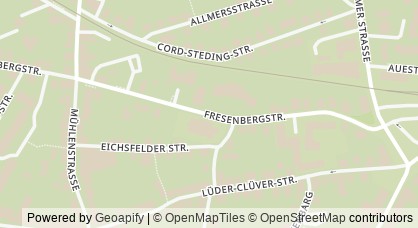
Our school is the youngest and northernmost Waldorf school in Bremen, founded in 2006. We are still a small and close-knit school and, since our move on August 1, 2010, are located on Fresenbergstraße, in the geographical center of Bremen-North.
Our school is a single-stream school, offering education from first grade through to the Abitur (university entrance qualification). Entry into individual grade levels is possible by arrangement. Since our relocation, we have our own school grounds, which we are currently developing according to our own wishes and ideas.
Children can be cared for in our after-school care program daily until 3:00 pm. They receive a delicious, nutritious lunch made with organic ingredients.
Waldorf education aims to enable children and young people to develop their own creative powers and abilities from the ground up. Experiences within the stable class community provide an important social learning environment.
Many elements that now exist at other schools have long been part of the basic pedagogical understanding at Waldorf schools:
– Stable class groups through the elimination of grade repetition
– Foreign languages from first grade
– Block scheduling (epoch teaching)
– Comprehensive school from grades one to twelve
– Artistic design of lessons
– Horticulture and crafts lessons
– Detailed written reports
Waldorf education originated from Rudolf Steiner's ideas for the education of the children of workers at the Waldorf-Astoria cigarette factory, a school he co-founded. Rudolf Steiner was convinced that children's education should not be geared towards the (hypothetical) future expectations of the economy regarding graduates. Education should guide children to develop their innate abilities and sharpen their perception of their natural and social environment.
Waldorf education is not a closed system that, once learned, simply needs to be applied. Waldorf schools are based on the conviction that every child's development is individual and yet embedded in universal principles. Therefore, they require adults to cultivate an open-minded, unprejudiced approach and to develop their own capacity for genuine attentiveness. Effective education arises from the self-education of the adult.
The curriculum is based on the development of the adolescent from the perspective of anthroposophical understanding of human nature. The teaching content is not viewed solely as learning material, but the way it is presented is also seen as age-appropriate developmental support.
Methodology
Lessons begin with personal experience and activities. In the lower grades, concepts are translated into vivid imagery, which then, in the upper grades, allows students to develop their own judgments and ultimately their own creative actions based on these experiences. Students are generally accompanied by a class teacher throughout the lower and middle grades. During the upper grades, this role is taken over by the class advisor.
In block teaching, a single topic is explored intensively for two lessons each day, usually at the beginning of the school day. The change of block teaching every three to four weeks is a deliberately chosen sequence that extends throughout the school year and even the entire school career. Forgetting plays a particularly positive and developmentally beneficial role in this process. During this forgetting phase, the material is internalized, thus stimulating a subsequent, more in-depth exploration of the same topic.
Contact person
-
Telephone: 0421 460 52 10Fax: 0421 460 52 11Website: http://www.fws-bremen-nord.de