News
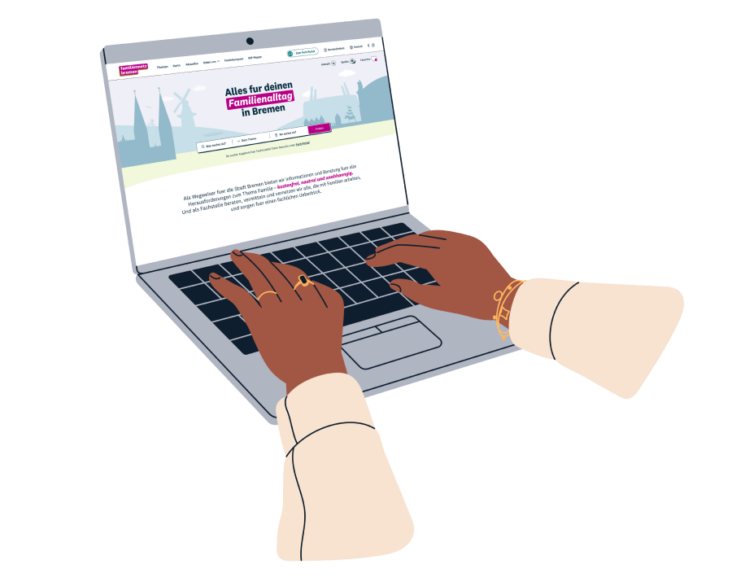
Reaching families better: familiennetz bremen now in 10 languages
Whether in daycare centers, family counseling services, youth services, or migration counseling: professionals often face the challenge of making important information accessible to families, even if German is not their first language. The Bremen Family Network now offers even more support in this area.

The Office for Social Services is reorganizing
The Office for Social Services (AfSD) within the Senator for Labor, Social Affairs, Youth and Integration is to be reorganized for greater clarity. Therefore, the current six social service centers will be consolidated into four. In addition, four specialized service units will be established. The goal is to achieve clear responsibilities, consolidate expertise, and improve collaboration.

Initiative for Social Rehabilitation eV is looking for premises for additional "Work in Focus" locations
From January 2027, the Initiative for Social Rehabilitation eV will establish further locations for its advice center “Work in Focus”, namely in the north, south and east of Bremen as well as in Bremerhaven – and is now looking for suitable premises.
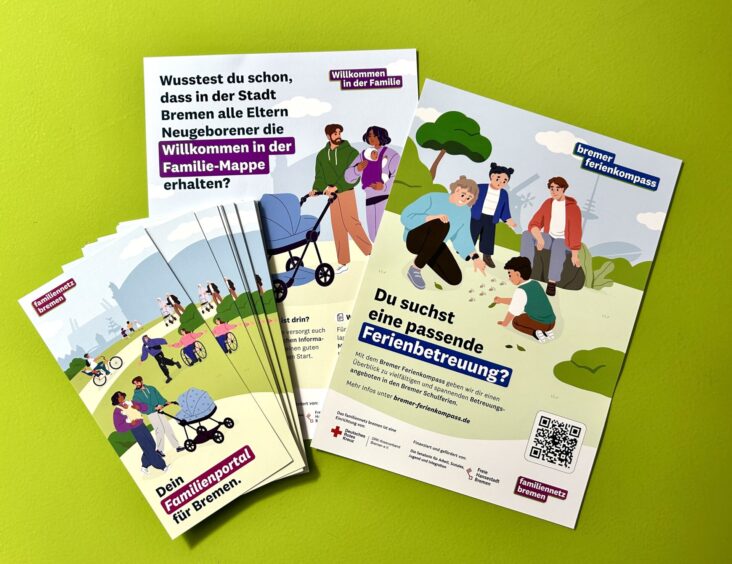
Freshly printed: New information materials for your work with families
New look, new website – and now the Bremen Family Network is also available in print: To complement our redesigned websites (Family Portal and Specialist Portal), we have new printed information materials. These will help you easily inform families about our work and provide helpful information for everyday family life.
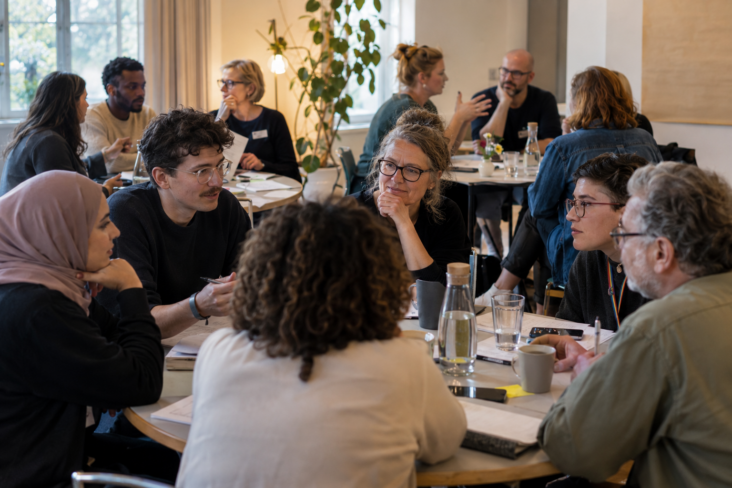
We're still missing your network!?
Do you lead a working group or network in the state of Bremen? Are you active in a working group or do you know of a roundtable that aligns with our topics of family education, the social support system, or early intervention services? Then get in touch with us!

Bremen City Library launches newsletter for educational professionals
"ALLES Bildung" (ALL Education) is the name of a new newsletter from the Bremen City Library, aimed at educators in nurseries, kindergartens, and schools. Twice a year, it will provide concise information about current offerings, interesting media, events, and useful information related to visiting the library.
Half a billion euros for daycare centers
Bremen is investing significantly in early childhood education: Around half a billion euros are flowing into daycare centers annually, 100 million euros more than at the beginning of the legislative period in 2023. The focus is on quality: Language support for preschool children is to become mandatory with a planned amendment to the law.
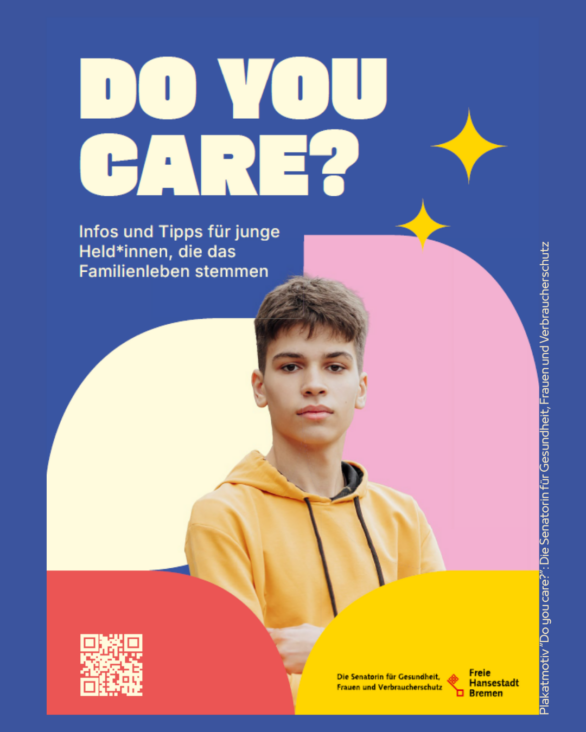
New information material for young carers in Bremen
To raise awareness of the situation of young carers and increase the visibility of the issue, the Senator for Health, Women and Consumer Protection published new informational materials in July 2026. An eight-page brochure entitled "DO YOU CARE: Information and tips for young heroes who manage family life" is available. It is supplemented by posters and postcards.

Bertelsmann Foundation: Education and Participation Package Reaches Too Few Children
More than eight out of ten eligible children do not receive the participation allowance: 15 years after the introduction of the Education and Participation Package (BuT), only a minority of eligible children and young people receive the benefit for social and cultural participation, according to the Bertelsmann Foundation. Significant gaps also exist regarding school supplies and school lunches. At the same time, reliable nationwide data is lacking on how many children are eligible, what benefits they actually receive, and why they are not reaching their intended recipients.

Draft law on structural reform of child and youth welfare adopted
On August 12, the Federal Cabinet approved the draft of a First Act on the Structural Reform of Child and Youth Welfare Services to strengthen and modernize these services. With this, the Federal Government is beginning the implementation of a comprehensive, two-stage structural reform. The goal is to make child and youth welfare services fit for the future.