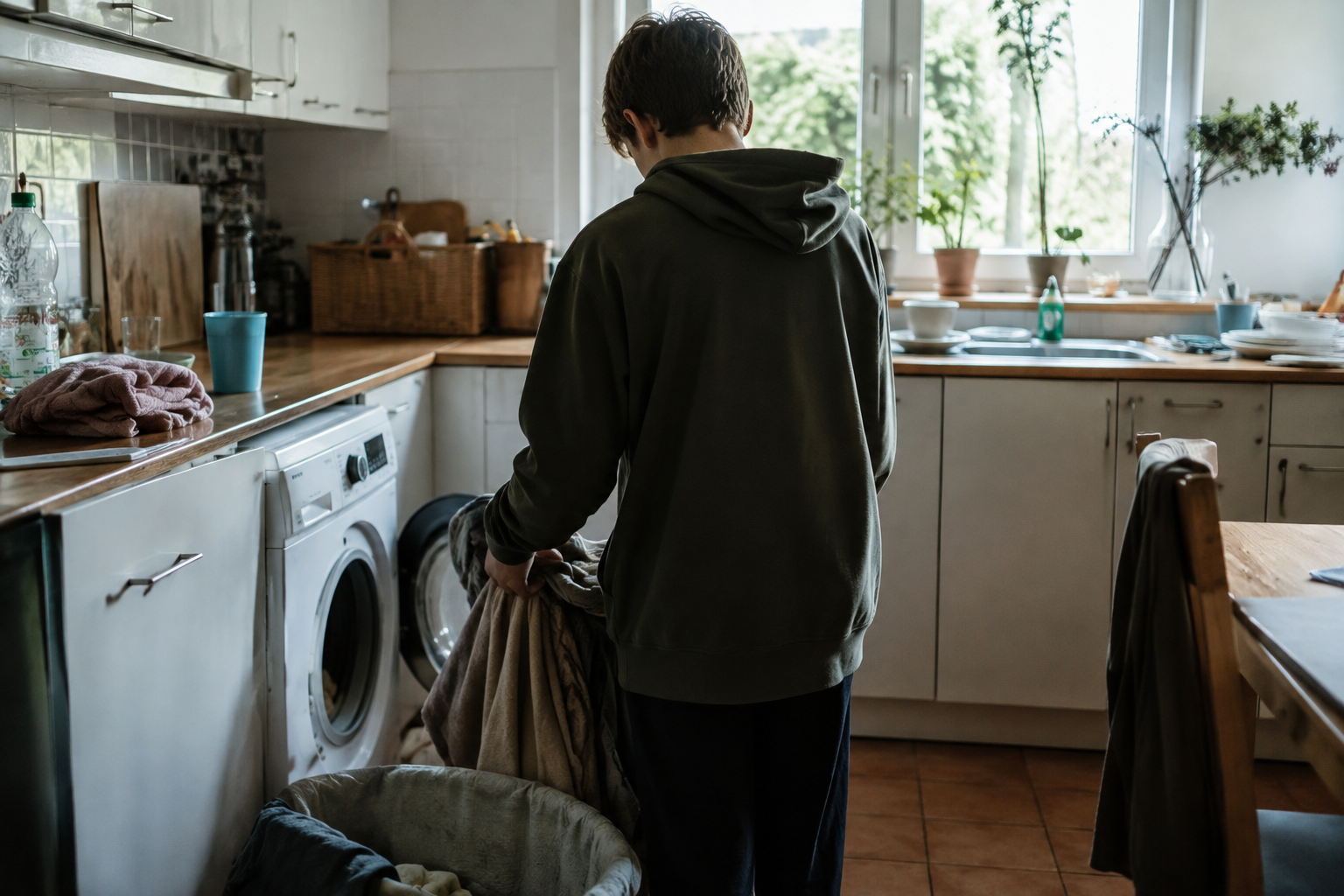
Taking over household chores, picking up medication, helping a parent get dressed, or caring for younger siblings: Some children and teenagers regularly assume responsibility at home because a family member is ill, in need of care, or has a disability. They are called young carers. It is estimated that this affects about five to six percent of all children and teenagers in Germany. The Bremen Senator for Health estimates there are between 6,100 and 7,400 young carers in the state.
Young carers are children and teenagers who regularly take on responsibility for a family member who, for example, is physically or mentally ill, requires care, has an addiction, or is disabled. They look after parents, grandparents, or siblings. Often, they support other family members in this. Sometimes, however, they are the only person providing care. Many young carers perceive their responsibilities as a natural part of family life and wouldn't even describe themselves as caregivers. This makes it all the more important to take a closer look.
The tasks can look very different:
- Care and physical support: for example, helping with dressing, washing, eating or taking medication.
- Household chores: shopping, cooking, cleaning, doing laundry or other tasks that are normally done by adults.
- Caregiving: providing companionship to a sick family member, supervising them or accompanying them to appointments.
- Sibling care: looking after younger siblings, cooking for them, taking them to school or daycare, or helping with homework.
- Organization: Scheduling appointments, handling correspondence, assisting with applications, or taking on other organizational tasks.
- Emotional support: listening, comforting, calming, or trying to stabilize the mood and family life.
Between responsibility and being overwhelmed
Helping others can also bring positive experiences. Young carers often see themselves as an important part of their family, develop a sense of responsibility, and experience self-efficacy. At the same time, the responsibility must not become so great that their own needs and age-appropriate development are neglected. The line between everyday help within the family and being overwhelmed is often blurred. Signs of excessive strain can include, for example, frequent absences from school, concentration problems, declining performance, exhaustion, or withdrawal from friends and leisure activities.
Adults in the surrounding area are particularly important
Many young carers rarely talk about their situation on their own. Some take their responsibilities for granted, while others are ashamed or afraid of what might happen if outsiders find out about their family situation. The constant worry, for example, about the deteriorating health of the sick family member, puts an additional strain on many young carers. That's why adults in their lives are especially important: family members, teachers, school social workers, educational professionals, doctors, and professionals from counseling, care, and youth services can be attentive and offer opportunities to talk.
- The key is to listen, take them seriously, and work together to find ways to reduce their workload. Young carers should be involved in decisions. At the same time, it must be ensured that their help remains voluntary and that they can also say no.
Help and advice for young carers and their families
Support doesn't have to begin only when the situation becomes overwhelming. The goal can be to redistribute tasks within the family and involve professional or volunteer support. Family members can also seek advice on how they can relieve the burden on children and young people.
Looking closely can help
Young carers do a lot – often without people outside their family knowing about it. Not every form of support in daily family life automatically means they are overwhelmed. What's crucial is whether children and young people have enough time and space for school, friendships, leisure activities, and their own needs.
If you suspect that a child or young person is taking on too much responsibility, you can take an important first step: show interest, listen, and offer support. Care work shouldn't mean that young people are left alone with their worries and responsibilities.
Who can young carers, their relatives and other caregivers contact?
- Pausentaste.de is a nationwide information service specifically for young carers. In addition to information for affected children and teenagers, it offers materials for parents and professionals.
- The Bremen Girls' House offers counseling to girls* and young women* from 5th grade up to age 26 who are facing difficult life situations. The counseling is free and can be accessed anonymously. Mental health issues and family problems can also be addressed.
- If you have concerns about your own well-being or the well-being of a child or young person, you can contact the Bremen Child and Youth Emergency Service . The child protection hotline , 0421 699 11 33, is staffed 24/7 and can also be contacted anonymously.
- The German Child Protection Association (Kinderschutzbund eV) in the state of Bremen supports and advises children and young people by telephone on 0421 240 112 20 (Mondays, Tuesdays, Wednesdays and Fridays from 11 a.m. to 1 p.m. and Thursdays from 3 p.m. to 5 p.m.), by email and also in person, including at a location of choice, e.g., school, youth center, sports club, favorite café, public places.
- If the primary concern is to better organize the care of a relative and thereby relieve the burden on children or young people, families can also contact the care support centers in the state of Bremen . They offer neutral and free advice on care, support services, and suitable assistance.
- Number against worries: Children and young people can get anonymous and free advice by phone on 116 111 , Monday to Saturday from 2 pm to 8 pm, or use the online or chat advice service.
- Parents and other caregivers can use the parent helpline of Nummer gegen Kummer on 0800 111 0550 (Mondays, Wednesdays and Fridays between 9 a.m. and 5 p.m., Tuesdays and Thursdays between 9 a.m. and 7 p.m.).
- Johanniter superhands offers an information platform for children and young people providing care and a training platform for professionals.